280E Considerations for Arizona Wholesale and Transfer Operations
Wholesale movement between Arizona marijuana establishments is a reseller activity whenever the distributing entity takes title to the product, which means a narrow inventoriable cost base: purchase price plus inbound freight and a limited set of permitted acquisition costs. Warehousing, outbound transport, sales staff and compliance personnel are generally disallowed federally — a difficult combination in a segment whose entire value proposition is logistics and compliance.
Where the operator functions as a service provider rather than a buyer — moving another license holder's product for a fee, coordinating testing pickups, and handling transfer paperwork — the economics and accounting look different. Revenue is fee income, there's no owned-product inventory, and the cost structure is almost entirely non-inventoriable. Many Arizona wholesale operators run both models at once and need them kept separate in the chart of accounts.
- Owned-product model: reseller COGS, narrow inventoriable cost pool
- Fee-for-service model: service revenue, minimal inventory, larger disallowed cost share
- Separate the two models in the chart of accounts, not in a spreadsheet at year end
Cost Accounting, Inventory and Seed-to-Sale Reconciliation in Distribution
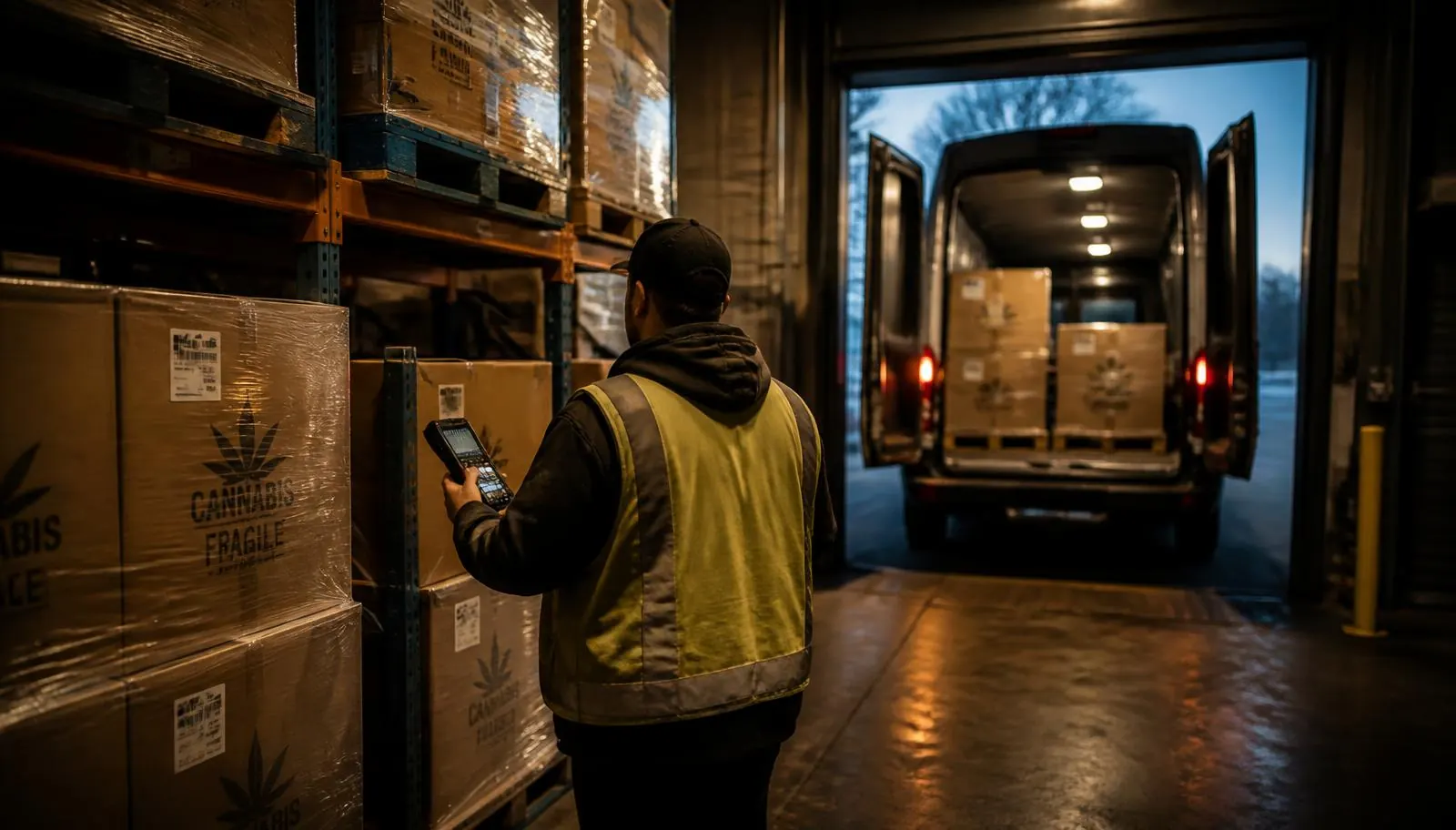
Wholesale transfer activity generates a large share of Arizona's overall inventory-tracking volume: transfers in, testing holds, sampling, remediation and transfers out. Every manifest is an inventory event, and package-level reconciliation between the seed-to-sale system, the warehouse system and the ledger is the core control. Inventory held on consignment or on behalf of a brand partner needs to be segregated so it never shows up as owned inventory on the balance sheet.
Quarantine and failed-test outcomes need explicit accounting treatment: product held pending results, product remediated, product destroyed. Destruction is a hard cost, and in a 280E context an expensed destruction carries no offsetting deduction federally, so failure rates carry a tax cost beyond the obvious loss.
Route and customer profitability reporting is the operating counterpart to all of this. Cost to serve varies enormously between a single-stop Scottsdale account and a route stretching out to Yuma or Flagstaff, and blended pricing hides which accounts are actually worth keeping.
Tax Planning and Recommended Services
Wholesale and transfer operators face concentrated receivable risk and thin margins, so cash forecasting, credit policy and collections discipline usually deliver more value than tax structuring alone. Where consignment arrangements, multiple license types and shared ownership intersect, entity structure and clean intercompany documentation become the main planning focus.
We build the accounting system first and let the tax return follow it. If you operate a licensed Arizona distribution business, a diagnostic review will quantify what your current treatment is costing you before any engagement begins.